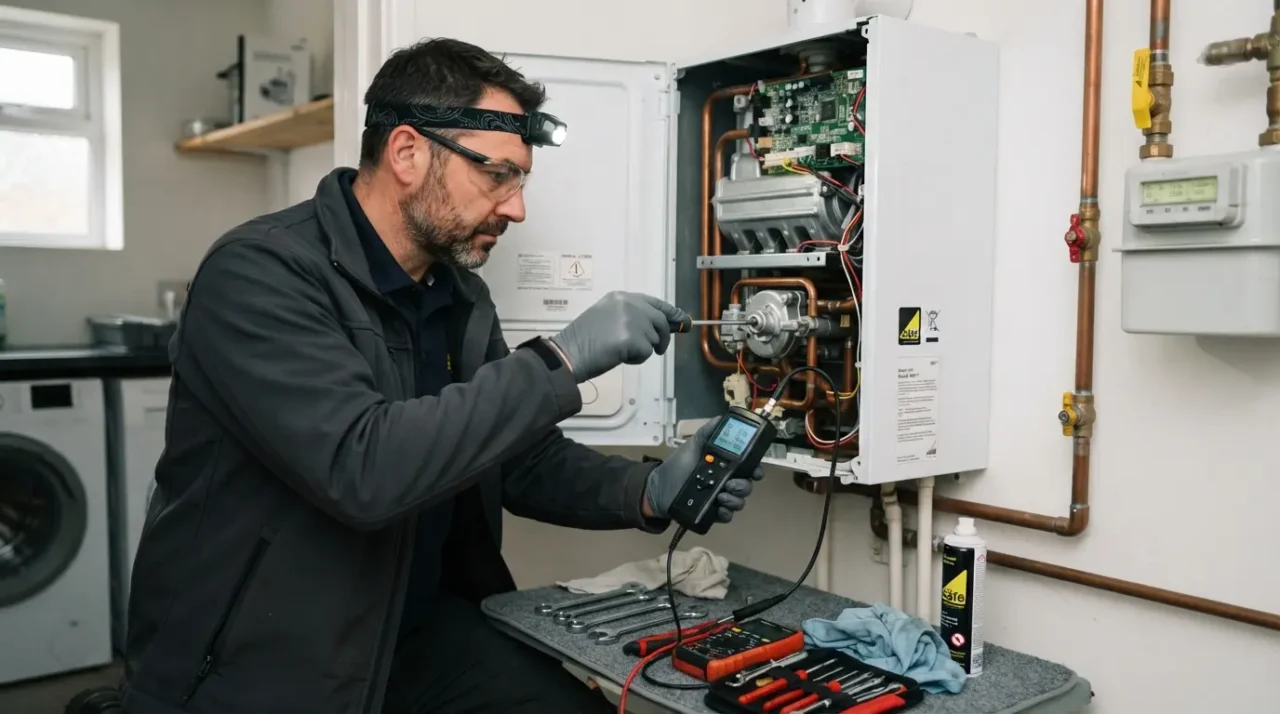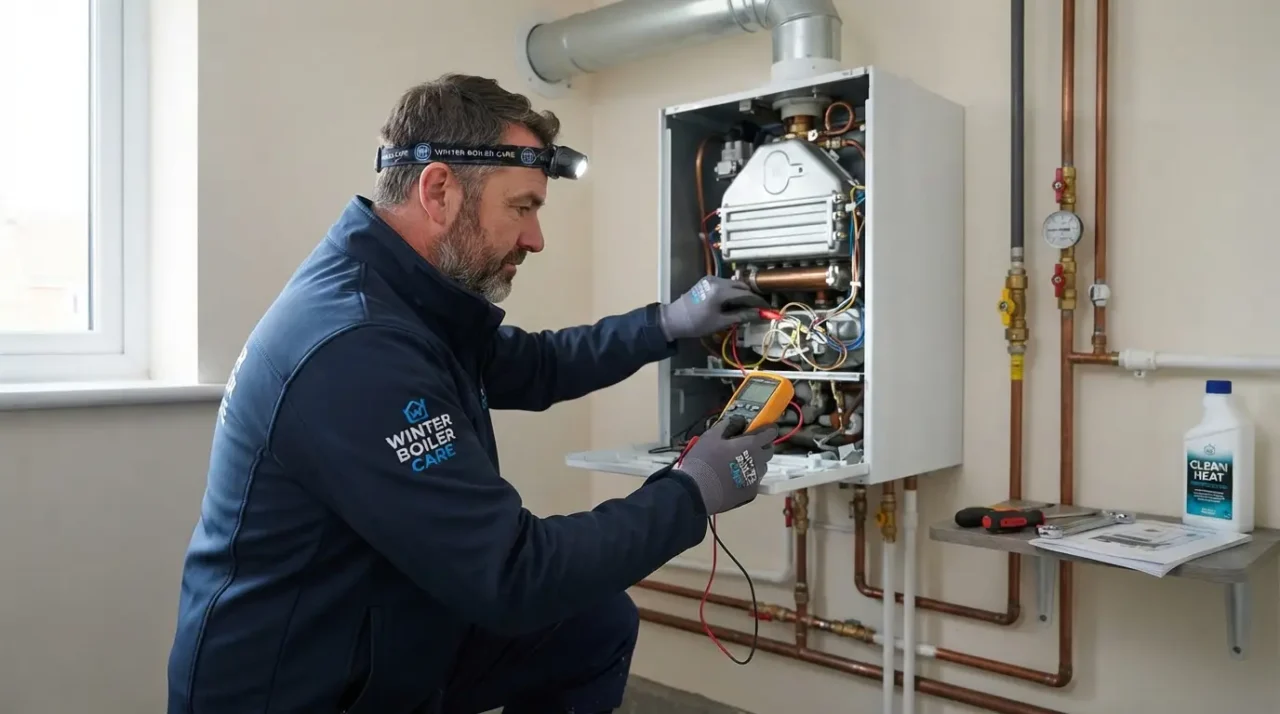
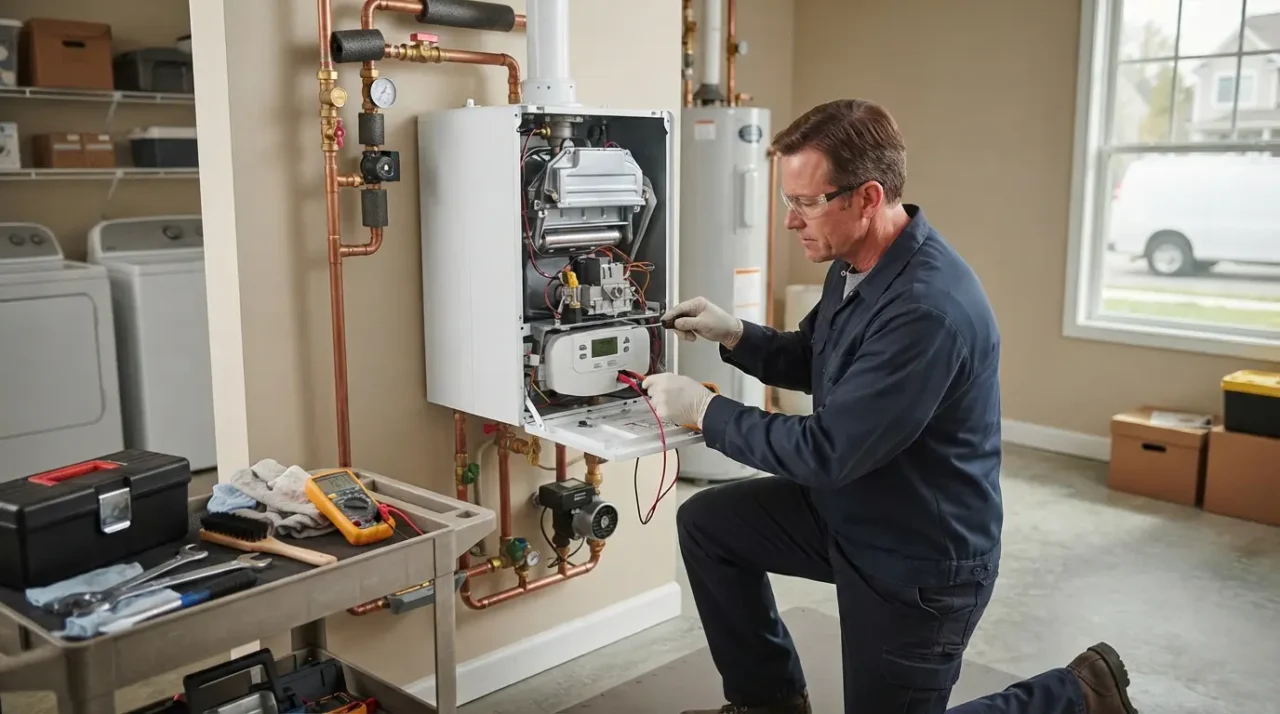
Regular heating maintenance, including annual boiler servicing, radiator bleeding, and periodic power flushing, prevents breakdowns, keeps your heating running efficiently, and extends the life of your whole system. Most heating faults develop slowly and are far cheaper to catch early than to fix after a full breakdown.
When people think about heating maintenance, they usually think only of the boiler. But the boiler is just one part of a much larger system, one that includes radiators, pipework, valves, thermostats, and the water circulating through all of it. Looking after the whole system, not just the boiler itself, is what actually keeps a Glasgow home warm and reliable through the colder months.
This guide covers what home heating maintenance really involves, why it matters, and how to build a simple routine that saves you money and stress over the long run.
Your Heating System Is More Than Just the Boiler
It’s easy to treat the boiler as the whole heating system, but radiators, pipework, and controls all play a part in how well your home heats up and how efficiently it runs. A perfectly serviced boiler can still leave you with cold rooms if the radiators are full of sludge, or with wasted energy if the thermostat is outdated and poorly calibrated. Proper heating engineer maintenance looks at the system as a whole, not just the unit that gets the most attention.
Why Regular Maintenance Prevents Bigger Problems
Most heating faults don’t appear out of nowhere. They build up slowly, a slight pressure drop here, a little sludge accumulation there, a valve that’s stiffening up over time. Left unchecked, these small issues eventually combine into a bigger failure, usually at the worst possible moment, like the first genuinely cold week of the year.
Regular maintenance catches these developing issues while they’re still simple and inexpensive to fix. It’s the difference between a five minute adjustment during a routine visit and an emergency callout with no heating in the house for a night or two while parts are sourced.
Cold Radiators Are a Maintenance Warning Sign
One of the clearest signs that heating maintenance has been neglected is a cold radiator. If the top of the radiator stays cold while the bottom is warm, that’s trapped air, and it’s usually fixed with a simple bleed using a radiator key, something most homeowners can do themselves in a few minutes.
If it’s the opposite, warm at the top but cold at the bottom, that points to sludge build up inside the radiator and pipework rather than air. This is more serious, since sludge restricts circulation throughout the whole system and makes your boiler work harder to achieve the same heat output. In these cases, a power flush clears the built up debris and restores proper flow, often noticeably improving both heating performance and efficiency afterward.
Maintenance Protects Your Energy Bills
A heating system that isn’t maintained gradually loses efficiency, and it happens slowly enough that most homeowners don’t notice until the bills have crept up significantly. Sludge in the radiators, air pockets in the pipework, and a boiler running below its intended efficiency all force the system to use more energy to produce the same amount of heat.
Regular maintenance keeps everything running closer to how it was designed to perform, which is one of the more overlooked but genuinely significant reasons it pays for itself over time, particularly across a Glasgow winter when the heating is running for long stretches every day.
Older Central Heating Systems Need Extra Attention
Glasgow’s mix of housing, from Victorian tenements to newer suburban builds, means heating systems vary enormously in age and condition. Older central heating systems, particularly those in period sandstone properties, often have pipework routed through unheated lofts and external walls, along with radiators and components that have been in place for many years without significant upgrades.
If your system is genuinely reaching the end of its life, rather than just needing maintenance, it’s worth having an honest conversation with an engineer about central heating installation rather than continuing to patch an ageing system that’s becoming less reliable and less efficient every year.
A Simple Home Heating Maintenance Routine
A good maintenance routine doesn’t need to be complicated. Book an annual boiler service, ideally in early autumn before the heating season properly begins, to catch developing faults and keep your warranty valid. Bleed radiators that feel cold at the top a few times a year, particularly at the start of winter when the system has been idle over summer. Check your boiler’s pressure gauge periodically, and if it keeps dropping despite topping it up, get it properly inspected rather than repeating the top up indefinitely. And if it’s been several years since your system was flushed, or you’re noticing consistently cold or slow to heat radiators, ask about a power flush during your next service visit.
When Maintenance Isn’t Enough: Repair or Replace
Sometimes a fault goes beyond routine maintenance, and that’s when it’s worth calling in a proper diagnosis. Persistent radiator faults, a boiler that keeps losing pressure despite repeated top ups, or unusual noises from the pump or system point to something that needs a heating system repair rather than another maintenance visit. A good engineer will always be upfront about whether you’re looking at a straightforward repair or a bigger underlying issue.
Upgrading Controls as Part of Maintenance
Maintenance isn’t only about keeping old components running. It’s also a good moment to consider whether your controls are still doing their job properly. An outdated or poorly located thermostat can mean your heating runs longer than it needs to, or heats rooms unevenly. A thermostat installation during a routine maintenance visit is a simple upgrade that often improves both comfort and efficiency at the same time.